HOA Security in Horizon West
Horizon West is built as villages inside a county planning area, so a board here sits on one layer of a stack that also holds a master association and a community development district. Nexus Security Firm staffs gates, runs patrol routes and covers amenity buildings for those associations, and prices each pattern against the number of homes that will share it.
HOA Security in Horizon West
Orange County plans Horizon West as a special planning area of roughly 20,700 gross acres, laid out as mixed use villages around a town center with greenbelts between them (Orange County). Each village holds several neighborhoods, and the county sized those neighborhoods against the capacity of the school at their middle. The result on the ground is dozens of separate homeowner associations sitting inside one plan, with a master association above them and a community development district assessment arriving on the property tax bill.
That stack is the first thing a security conversation here runs into. A village board can vote to spend village money on village common area. It cannot commit the master, and it cannot put an officer on a street the district built and the county maintains. Half the calls we take from this part of Orange County end up being a conversation about which body owns the ground the board wants covered.
The second thing is that Horizon West is still filling in. Occupied streets sit beside lots under construction, and a community may take over from a developer while the phase behind it is still a job site. That changes what an entrance log is for and who is passing through it all day.
Work out who is buying before anyone quotes you
A security contract needs one payer, one budget and one set of post orders. In a village community that sits under a master association and a district, those three can belong to three different bodies. We ask early because a proposal addressed to the wrong board wastes a meeting cycle.
The practical test is ownership of the ground. If the amenity building, the pool deck and the parking bays are village common area, the village board can staff them. If the road, the trail and the greenbelt were built and are maintained through the district, an officer standing there is standing on ground the village does not control, and post orders have to say what the officer does when something happens on it. That distinction reads as legal fine print until the night an officer is asked to move someone along from a park the board does not own.
Some phases can have a gate and some cannot
Gated loops exist in Horizon West where a builder laid private streets behind a single entrance, usually around an amenity or a lake frontage. Where the streets came through the district and connect to the wider village network, there is no lawful way to put a barrier across them, and no security budget changes that.
Boards on those open streets ask us for a gate anyway, because the gated phase a mile away has one and owners compare. The answer we give is the same every time: the money that would have bought a booth buys lighting on the dark stretches, a patrol route with logged checks, and coverage at the amenity building where the community holds something worth controlling. A board that hears that from a security company before it hears it from an attorney saves itself a study.
The per home figure depends on which association pays
A gate staffed around the clock is 168 hours a week. At Central Florida residential officer rates of $24 to $34 an hour it comes to roughly $209,000 to $297,000 a year, and the band starts at what officers earn here, $14 to $18 an hour unarmed (ZipRecruiter, Salary.com and Indeed, August 2026), carrying the 1.5 to 2 times markup a bill rate is built with (Belfry Software, 2026).
Spread that across a single village of 350 homes and owners are looking at $50 to $71 a month each. Spread the same post across a master body covering three thousand homes and it lands near $6 to $8. Nothing about the officer changed. The denominator did. Boards here have a real option most Orlando communities lack, which is to take a coverage question up a level where the arithmetic stops being frightening.
Village density is what makes patrol cheap here
Patrol pricing follows route density. An officer who has to drive twenty minutes between two contracts prices like an officer sitting idle, and that cost reaches the association. Horizon West villages sit close together by design, which means several associations can share a route and each pay a fraction of what a standalone contract would cost them.
Quick drive by checks run around $8 to $15 each in this market. A thorough check costs closer to $55, and it buys an officer who parks, covers the amenity deck and the problem lots on foot, logs plates and writes the visit up. Three of those a night comes to about $5,000 a month for one community, and less per association when the route serves neighbors on the same evening. Boards that talk to each other before they talk to us get a better number.
Occupied homes next to active lots change the daytime job
In a phase that is still building out, the entrance carries trade traffic from early morning onward, and the people passing through are legitimate, expected and unknown to the residents. The security value of a post in that setting is the log. Who came in, for which address, at what hour, and whether they left.
Associations that inherit a half finished phase from a developer usually want that record for a reason that has nothing to do with crime. It settles disputes about damage to a completed street, it gives the manager a timeline when a resident complains, and it tells the board how much of the traffic through the gate is construction that will end. Site fencing and material storage on the active lots belong to the builder and its own arrangements, and we stay out of that.
What the entrance looks like when a post goes live
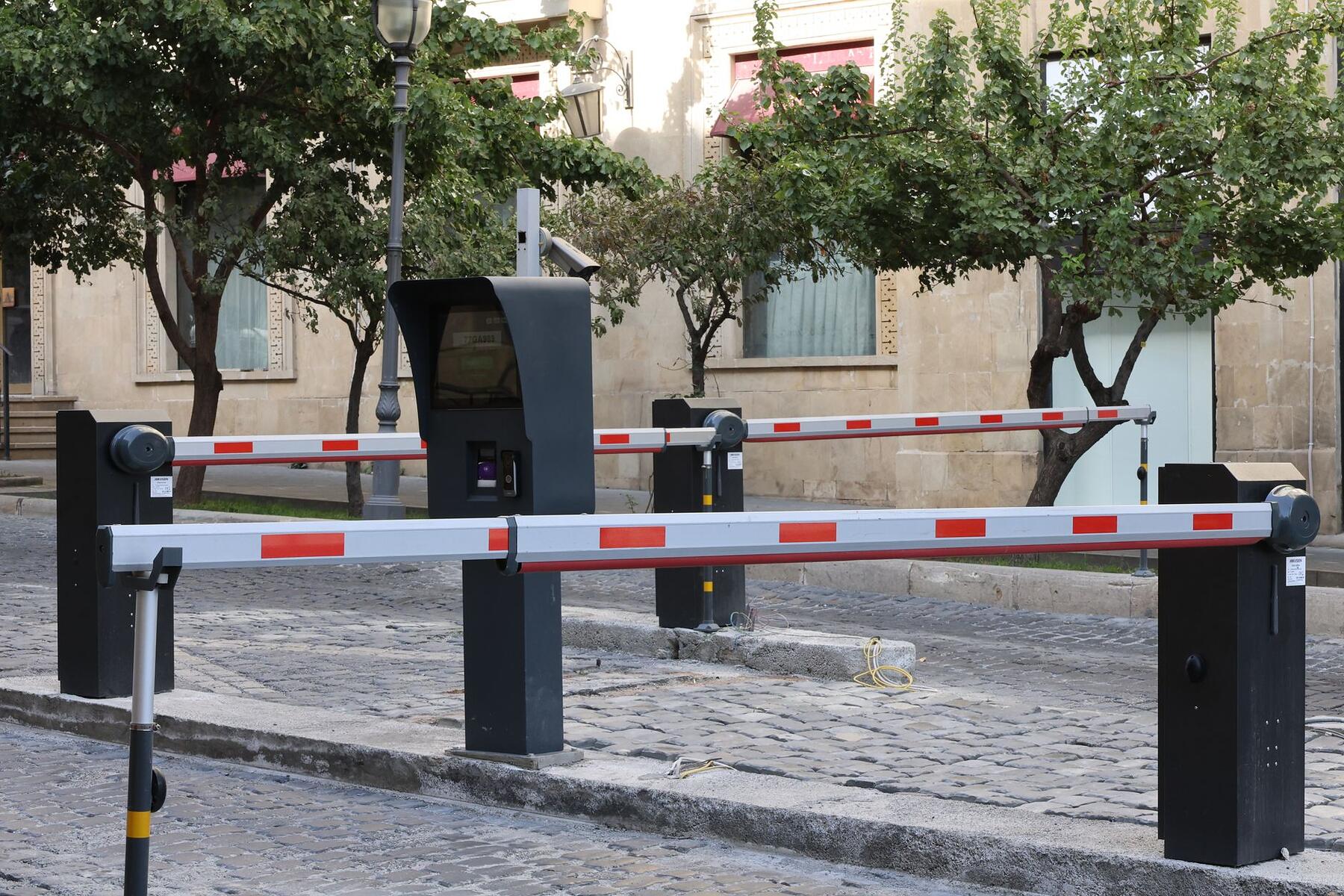
Most Horizon West entrances were built with a booth, a resident transponder lane and a visitor lane with a call box. An officer on that post works the visitor lane, checks names against the access list the association maintains, watches the resident lane for vehicles following through on one transponder, and keeps the log. The booth condition matters more than boards expect. Power, air conditioning in July and a working barrier decide whether a post is staffable at all, and we check that on the walk before anyone writes a price.
What a Horizon West board should expect from us
An agency number owners can check for themselves
Our FDACS Class B agency license is number B 1900066, and the Division of Licensing runs a public search an owner can pull up from a phone while the board is still presenting. Officers on a Horizon West post carry their own Class D licenses. With this many associations bidding coverage in one planning area, the fastest way to shorten a bidder list is to ask each one for an agency number and check it.
Orange County plans Horizon West across roughly 20,700 gross acres, about 11,850 of them developable (Orange County).
Quotes carry the annual total and the per home split
Every pattern we price for a village association shows the hourly rate, the weekly hours, the year one total and what that works out to per home per month at your home count. Where a master body might reasonably carry the cost instead, we show that division too. Owners in this area already read a tax bill with a district assessment on it and a dues statement beside it, so a board arriving with one number and no breakdown gets a hard meeting.
Around 70 percent of a security bill rate reaches the officer, with about 10 percent in indirect cost (Belfry Software, 2026).
A supervisor is assigned to the post and attends it
Residential coverage fails overnight, and it fails the same way in a new village as in an old one: an open shift nobody filled, an officer working a double, and a booth that goes quiet before dawn. Every post we staff has a supervisor assigned who attends it, including on night shifts, and the dispatch line is answered around the clock, so an officer who needs a decision gets one. Incidents are documented and that documentation goes to the association.
Turnover across the guard industry stood at 77 percent in 2024 (ASIS International).
A typical Horizon West coverage question
The situation: A common call from this area comes from a village board of a few hundred homes with an amenity building, a pool and a parking lot that backs onto a trail connecting to the next village. Owners report people at the pool who do not live there, a run of overnight entries into unlocked cars in the lot, and a board split between buying a gate the streets cannot take and doing nothing.
What gets done: We walk it after dark with a board member and the manager. The trail connection and two unlit stretches of the lot are where the walk spends most of its time. We come back with three costed patterns: a weekend evening amenity post at about 20 hours a week, a nightly patrol with logged checks, and the combination, each with the annual total and the monthly figure per home. We also write down what lighting the lot would cost the association to fix, because that is a capital item and it works every night without a schedule.
How it turns out: Boards in this position most often buy the amenity post for the months the pool is busy and add patrol through the winter, then revisit the lighting at budget time. A few decide the lighting alone is the year one spend and come back to us after. Either way the vote happens against numbers instead of against a feeling.
Questions Horizon West boards ask
These come up in almost every call from a village association in this planning area, and the money questions come first because that is the meeting the board is preparing for.
Other communities we cover
Neighboring associations are covered by the same officers, and boards nearby often compare notes on what they are paying.