HOA Security in Baldwin Park
Baldwin Park was designed as a connected street grid with garages on rear alleys and parks the whole city uses, so there is no entrance to staff and no perimeter to close. The coverage that fits here runs the alleys at the hours the incidents happen and documents what it finds.
HOA Security in Baldwin Park
Baldwin Park was built in the early 2000s on the site of the former Orlando naval training center, to a new urbanist plan: narrow streets with traffic calming, deep sidewalks, garages reached from rear alleys so the street face stays clear, a walkable village center with a supermarket and restaurants, and a grid that connects to the surrounding neighborhoods at many points instead of one. Lake Baldwin sits at the middle of it with a paved loop trail around the whole shoreline, and the parks along it draw people from across Orlando.
Every one of those design decisions was the right one for a neighborhood and an inconvenient one for a conventional security plan. There is no gate, no wall, and no single road in. A board here that asks three agencies for a proposal will get at least one quoting an entrance post, which tells you that bidder has never driven the place.
The pattern that does hold is geographic. Cars and garages sit on the alleys at the back, where the lighting is poorer than the street face and where a person walking through attracts no attention at all. That is where the association's vehicle related complaints come from, and it is the part of the neighborhood a patrol has to be told to drive.
There is no entrance to staff and there will not be one
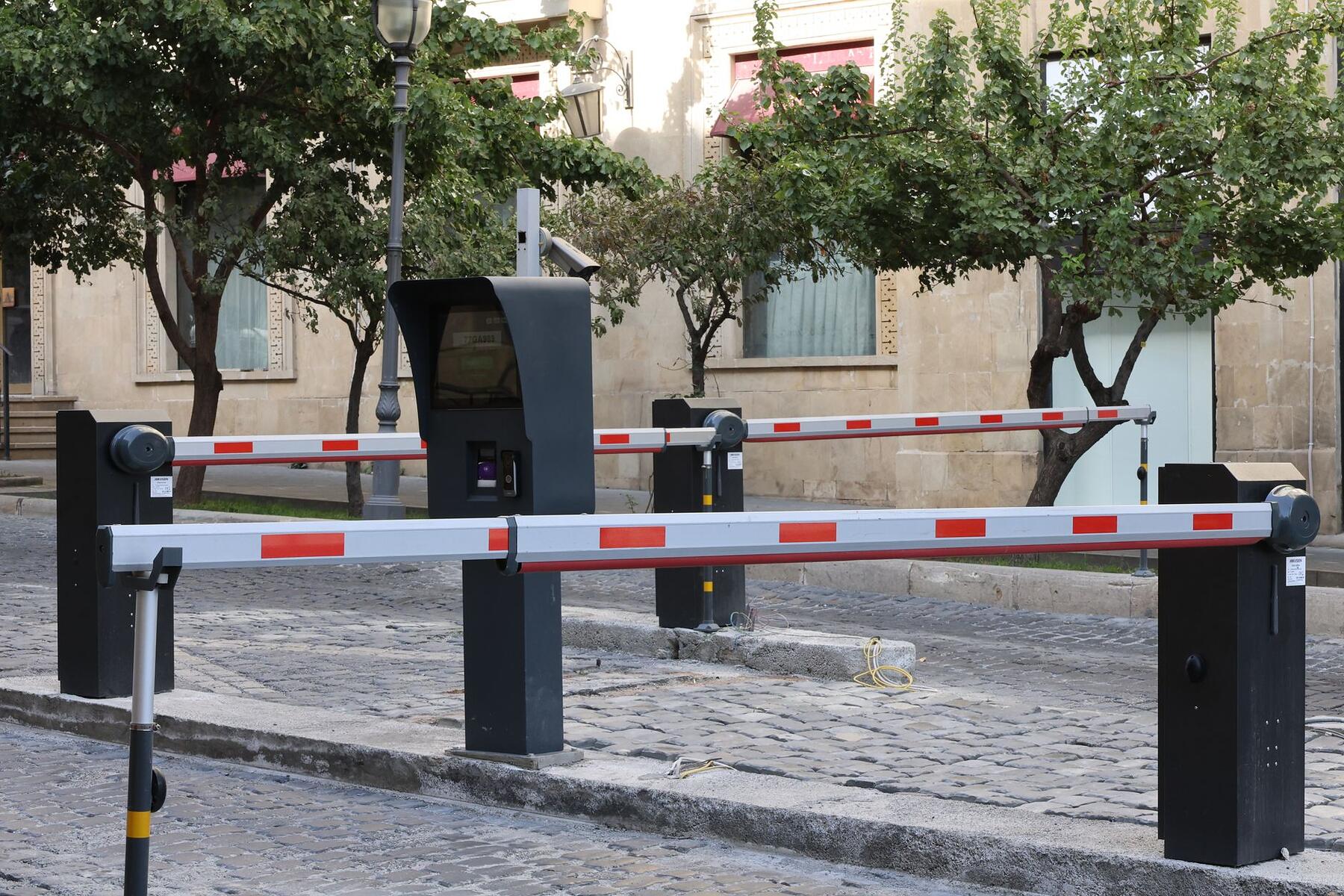
A gate post controls a single point of entry where the rest of the boundary holds. Baldwin Park has neither. The grid was deliberately stitched into the neighborhoods around it, the trail and the parks are open to the city, and the village center is retail frontage on public streets. An association here cannot put a barrier across those connections, and a security company that quotes one is selling a booth that will never be built.
What a board can buy is presence, documentation and coverage of the property the association owns. That means the pools and amenity buildings with their credential systems, the common areas, and a marked patrol on a logged route through the streets and the alleys at the hours the reports cluster. The absence of a gate rules out the most expensive option in this business, which is an outcome a board should take as good news rather than a limitation.
The alley is where the incidents are
Front elevations in Baldwin Park are watched by the street: porches, sidewalks, people walking dogs, and a design that keeps eyes on the pavement. The back of the same house is a service lane with a garage door, a bin enclosure, a parked second car and much less light. Anyone walking an alley at two in the morning is invisible from the street face that the whole plan was built to activate.
So the patrol specification has to say alleys. A route that runs the streets and skips the service lanes is checking the part of the neighborhood that already looks after itself. Our checks include driving the alleys at the hours the association's complaint log shows, stopping at the segments where entries have been reported, and logging what was found. Alley lighting is the item boards keep arriving at afterwards, and it is worth pricing that as a capital project alongside any coverage quote.
Parks that belong to the city sit inside the neighborhood
The lake trail runs about two and a half miles around Lake Baldwin, and the parks along it, including the dog park and the ball fields, are used by people from across Orlando who drive in, park on the street and walk. That traffic is a feature of living here and it is also the reason residents see unfamiliar vehicles and faces constantly, which makes the usual advice to report anything unfamiliar close to useless.
It also sets a hard limit on what an officer may do. On city park ground an association's officer has no more authority than any other member of the public, and post orders have to say that in plain terms. Where the officer does have standing is on association property: the pool decks, the amenity buildings, the association's own common areas and parking. Boards that blur that line end up with an officer asking someone to leave a public park, which is the complaint that reaches a commissioner.
What a route costs when the route is alleys
Patrol pricing follows time on the ground. Running the alleys as well as the streets makes a circuit longer than a drive by loop, and a check where the officer stops, walks a segment and writes it up costs about $55 here, while a quick pass without leaving the vehicle is $8 to $15. Three thorough checks a night comes to about $5,000 a month.
Across a community of a couple of thousand homes and units that is a couple of dollars per owner a month, which most boards can carry without a dues argument. A staffed post asks for 168 hours a week at $24 to $34 an hour, which is roughly $209,000 to $297,000 a year, and there is nowhere in Baldwin Park worth standing an officer for that money. Where a fixed post does make sense is a pool deck or an amenity building on summer weekend evenings, which at 16 hours a week runs near $20,000 to $28,000 a year.
What an alley check looks like
The officer takes the marked vehicle down the service lane at walking speed with the spotlight working the garage doors and the parked cars, stops where the complaint log says entries have happened, and walks the segment. What gets written down is what was open, what was unlocked and visible, which lights are out, and anything that was going on. Most nights the entry is dull. The value is that the segment was covered at a recorded time, and that the residents on it can see a marked vehicle in a lane that normally has nothing in it after midnight.
Why Baldwin Park boards work with us
A route written from your complaint log
A Baldwin Park proposal starts with the association's own reports, because the alleys and blocks that generate them are specific and a generic loop misses them. We weight the route toward those segments, run it at the hours the incidents fall in, and log every check with the time and what was found. The board gets a record it can read at a meeting, which is what an owner wants when asking what the security line bought this year.
A security bill rate typically sits at 1.5 to 2 times what the officer earns (Belfry Software, 2026).
An honest answer about what a post would buy here
Boards ask about a staffed presence because it feels like the serious option, and in a neighborhood with no perimeter it is the expensive one that changes least. We will cost a post if the board wants the figure for comparison, and we will say where lighting in the service lanes and a documented patrol would do more for a fraction of it. Some of our Baldwin Park conversations end with a lighting recommendation and no contract.
Florida unarmed officer wages run $14 to $18 an hour (ZipRecruiter, Salary.com and Indeed, August 2026).
Licensed officers and an agency number you can check
Work here is performed under FDACS Class B agency license B 1900066, a number the state lists publicly and any owner can check in under a minute. Officers carry their own Class D licenses. A neighborhood association with a mix of single family, townhome and condominium schedules is likely to be running more than one bid process at once, and the agency number is the quickest filter available to any of those boards.
Class D licenses are issued for two years and rest on 40 hours of approved training (FDACS Division of Licensing).
A typical Baldwin Park call
The situation: A common call from this neighborhood follows a run of overnight entries into vehicles parked behind the houses, with two garage doors found open in the same week. The neighborhood page has been busy, several owners have asked the board for a security patrol, and one has proposed gating a section of the grid.
What gets done: We drive the alleys after midnight with a board member, which is the only way to see what the problem looks like. The walk finds the lighting in the service lanes doing far less than the street lighting, a set of alley segments with no illumination at all between the houses, and the ordinary pattern of unlocked vehicles with visible contents. We cost two and three checks a night on a route weighted to those segments, and write down what the association would spend to light the lanes.
How it turns out: Boards here usually buy a nightly route and start a lighting project in the same budget year, and they tell owners plainly that the gate proposal is not available on a connected grid. The count falls where the lanes get lit. The patrol keeps the record, which is what the board needs when the next round of complaints arrives.
What Baldwin Park owners and boards ask
Most of these come from the same place, which is that the neighborhood was designed to be open and the security options that assume a wall do not apply.
Other communities we cover
Neighboring associations are covered by the same officers, and boards nearby often compare notes on what they are paying.